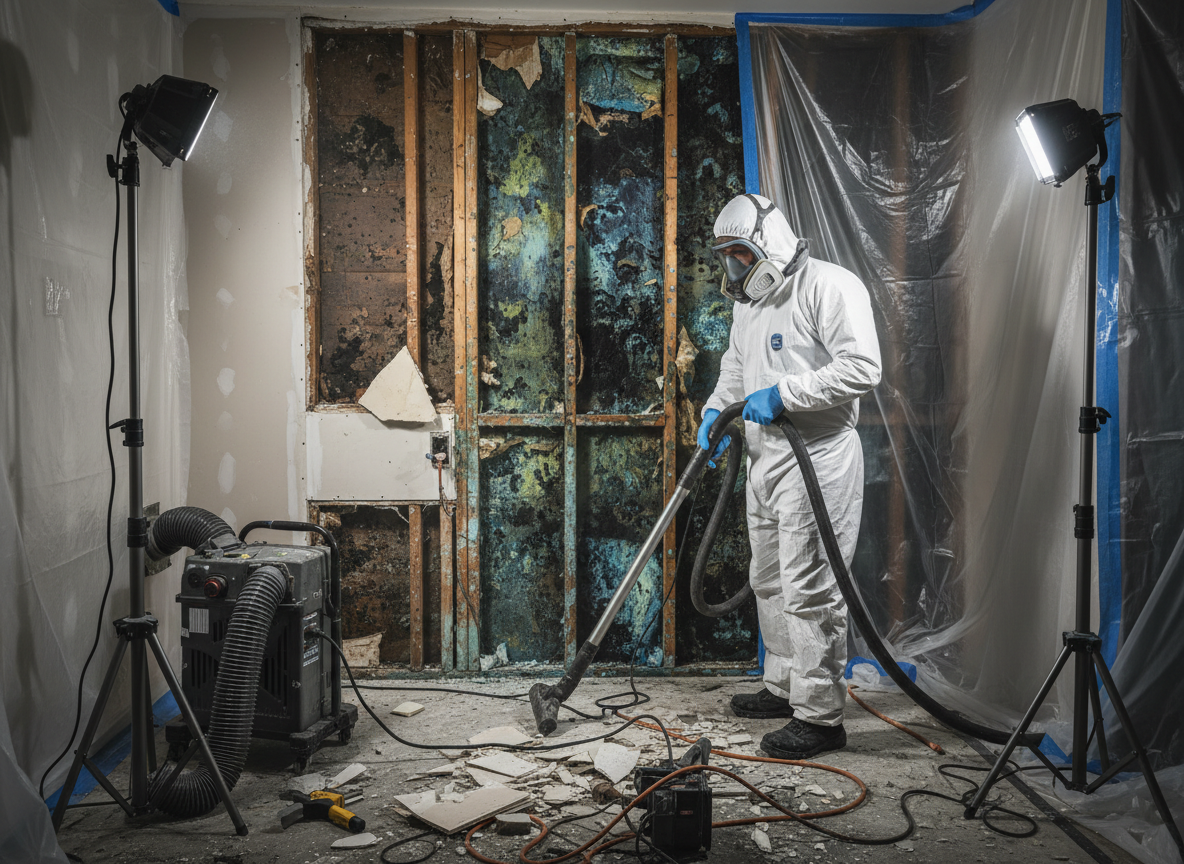
Chatsworth's Mediterranean climate brings hot dry summers followed by mild winters with occasional heavy rains that drive moisture into older single-family homes built from the 1950s onward in neighborhoods like West Chatsworth and near Chatsworth Park. These homes often feature stucco exteriors, original rooflines, and limited attic ventilation that allow water intrusion to remain hidden until black mold colonies appear on drywall or ceiling joists. Remediation crews must isolate affected rooms with containment barriers and use negative air machines because spores travel easily through the dry summer air into adjacent living spaces.
Los Angeles County building codes require proper disposal of contaminated materials and documentation of moisture sources before any reconstruction begins. In properties near Santa Susana Pass State Historic Park or Orcutt Ranch, crews frequently encounter crawl spaces with poor drainage where soil moisture from winter storms feeds mold growth on floor joists. Technicians test surface and air samples on site, then remove affected drywall sections at least 18 inches beyond visible growth to prevent recurrence once the home returns to normal humidity levels.
Nearby cities such as Northridge, Canoga Park, and Simi Valley share similar housing stock and terrain challenges, so the same protocols apply when residents call for help after discovering musty odors in bathrooms or laundry rooms. The work demands full PPE, HEPA filtration, and antimicrobial application on remaining structural wood to address both visible colonies and microscopic spores that the dry climate can aerosolize during removal.
Technician insight
In Chatsworth the thing that catches most people out with toxic mold removal is winter rain seeping behind stucco in 1960s homes around Chatsworth Park South where poor soffit ventilation keeps attics damp long after the skies clear, allowing colonies to spread across ceiling joists before any musty smell reaches the living areas.
West Chatsworth Bathroom Leak
A homeowner in West Chatsworth noticed discoloration on the ceiling after a winter storm. Inspection revealed water had traveled from a roof valley into the attic and down bathroom walls. Crews contained the room, removed two sections of drywall and insulation, treated the joists, and dried the space over three days. Clearance testing confirmed safe spore levels before the owner arranged repairs.
How it works
- 1
Initial Assessment
Technician arrives within hours, inspects all affected rooms, and maps moisture sources using meters and thermal imaging.
- 2
Containment Setup
Plastic barriers and negative air machines isolate the work zone to prevent spore migration into clean areas of the home.
- 3
Removal and Cleaning
Contaminated drywall, insulation, and trim are cut out and bagged; remaining surfaces receive HEPA vacuuming and antimicrobial treatment.
- 4
Drying and Verification
Dehumidifiers and air movers dry the structure, followed by post-remediation testing to confirm spore levels have returned to normal.
Pricing
Cost depends on square footage affected, depth of hidden growth, and whether structural wood requires treatment; upfront quotes provided after inspection.