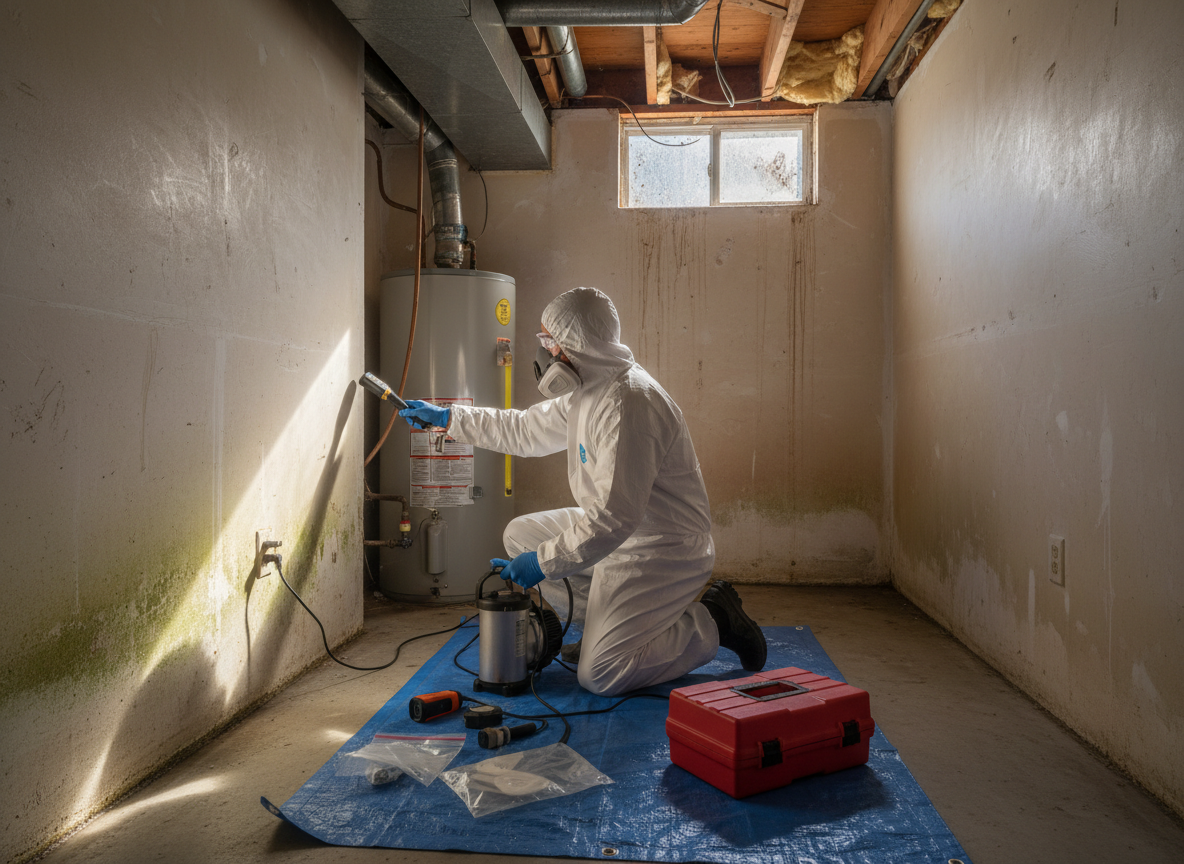
Mold testing in Chatsworth must account for the Mediterranean climate where hot dry summers alternate with mild winters that still allow condensation in crawl spaces and attics of older single-family homes built from the 1950s through the 1980s. Properties near Santa Susana Pass State Historic Park and along the edges of Chatsworth Park often sit on sloped terrain where poor drainage directs rainwater toward foundations, creating persistent hidden moisture that air sampling alone can miss. Technicians commonly pull samples from HVAC returns, behind drywall in bathrooms, and under subflooring in West Chatsworth ranch houses where original slab construction meets later room additions.
Los Angeles County building practices from earlier decades left many Downtown Chatsworth homes with limited ventilation and single-pane windows that trap humidity during the cooler months. Testing protocols here include moisture meter readings on stucco walls, borescope inspection of wall cavities, and surface lift samples from tile grout in kitchens where leaks from adjacent plumbing lines have gone unnoticed. Results frequently show Aspergillus and Penicillium growth tied to the region’s occasional heavy winter rains rather than obvious flooding events.
Homeowners in Northridge and Canoga Park border areas often request testing after noticing musty odors following Santa Ana wind events that push fine dust and spores through unsealed attic vents. Proper testing distinguishes between normal outdoor spore loads common to the San Fernando Valley and actual interior amplification, guiding whether remediation is required before any removal work begins.
Technician insight
In Chatsworth the thing that catches most people out with Mold testing near me is how the mild winters let moisture linger under 1960s slabs in West Chatsworth homes near Orcutt Ranch without obvious leaks, so air samples from the main living areas often come back clean while the real growth sits hidden beneath the flooring.
Hidden Growth Under Addition in Chatsworth Park
A homeowner in Chatsworth Park noticed a musty smell after winter rains but saw no visible mold. Testing revealed elevated spores coming from beneath a 1980s room addition where the original slab met newer concrete. We mapped moisture along the joint, confirmed Penicillium growth in the subfloor cavity, and provided a targeted remediation plan that avoided unnecessary demolition of unaffected areas.
How it works
- 1
Initial Assessment
Review property history, walk the interior and exterior, and identify likely moisture sources tied to Chatsworth’s terrain and older housing stock.
- 2
Sample Collection
Collect air, surface, and bulk samples from targeted locations including attics, crawl spaces, and HVAC systems common in local homes.
- 3
Laboratory Analysis
Send samples to an accredited lab for identification of mold types and spore counts, with turnaround typically within 48 hours.
- 4
Report and Recommendations
Deliver a written report with findings, photos, and clear next steps for any remediation needed based on local conditions.
Pricing
Pricing depends on square footage, number of samples required, and whether crawl space or attic access is needed; contact for an upfront quote.