Chatsworth sits in Los Angeles County with a Mediterranean climate of hot dry summers and mild winters that still allows moisture intrusion through roof penetrations and stucco cracks common in 1960s-1980s ranch homes found in West Chatsworth and near Chatsworth Park South. Mold abatement here often starts with locating water from aging galvanized plumbing or AC condensate lines that pool against slab foundations. Technicians must separate affected drywall and insulation without spreading spores into living spaces, especially in single-story homes where attics connect directly to living areas. Santa Susana Pass State Historic Park terrain means some properties back up to slopes where runoff can enter crawlspaces after even light rains.
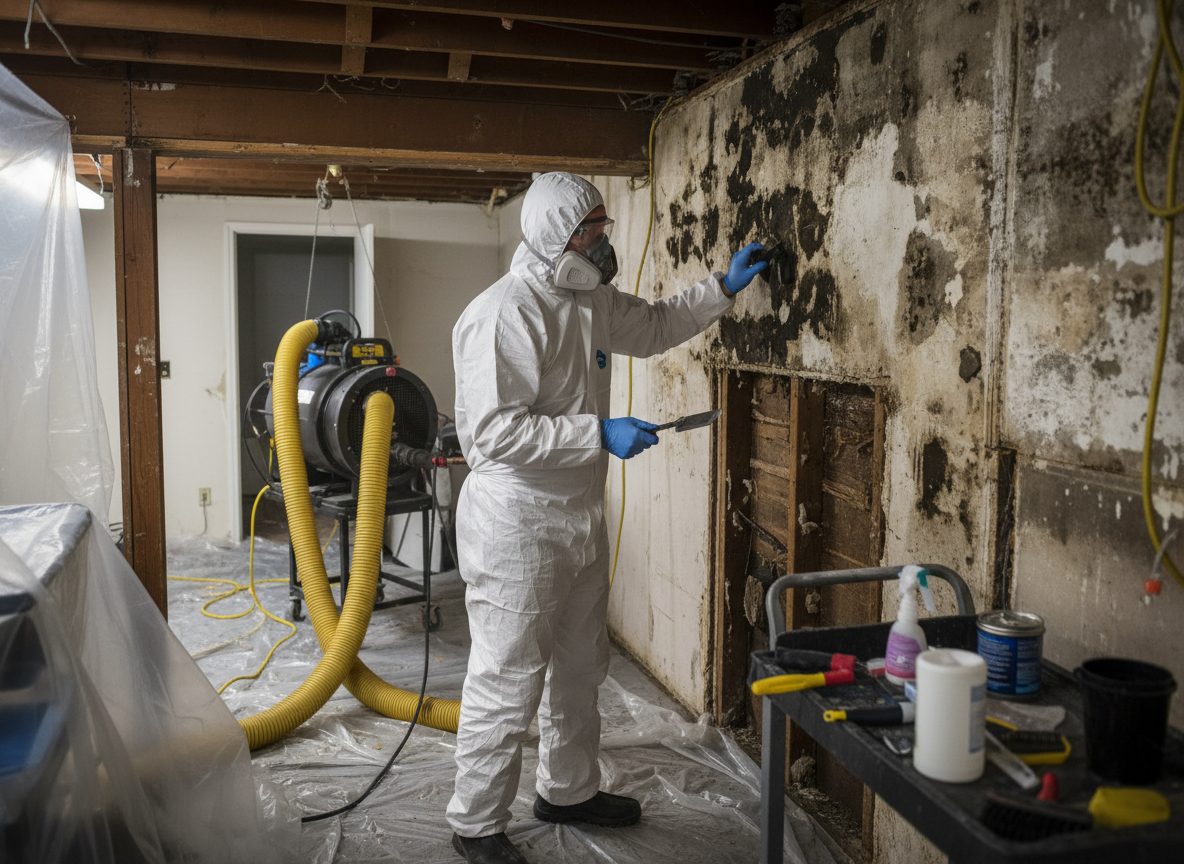
Abatement crews use negative air machines and six-mil containment barriers when working near Orcutt Ranch or in denser pockets of Downtown Chatsworth. Materials like paper-faced gypsum and fiberglass batts trap spores quickly once humidity spikes from indoor leaks. Edge cases include growth inside wall cavities after past floods from nearby Canoga Park drainage issues or hidden colonies behind kitchen cabinets where dishwashers leak onto particleboard. Post-removal, surfaces receive antimicrobial treatment followed by HEPA vacuuming before new insulation and drywall are installed. Verification air sampling confirms clearance before containment comes down.
Nearby Northridge and Simi Valley homes share similar construction but Chatsworth jobs frequently involve larger lots with detached garages that develop roof leaks unnoticed for months. Abatement must account for the dry summers that mask ongoing moisture until winter sets in. Crews document every step with photos because insurance adjusters in Los Angeles County require proof that non-porous materials were properly cleaned versus replaced.
Technician insight
In Chatsworth, the thing that catches most people out with mold abatement is how mild winter rains seep into the stucco-clad ranch homes common in West Chatsworth and around Chatsworth Park, then sit against the slab for months before anyone smells it.
Crawlspace Growth After Pipe Leak
A homeowner near Chatsworth Park South noticed odors following a bathroom pipe leak. Inspection found black growth on joists and insulation in the crawlspace due to poor ventilation. We contained the area, removed affected materials, dried the space, and confirmed clearance with air sampling.
How it works
- 1
Initial Assessment
Technician inspects for visible growth and moisture sources using meters in Chatsworth homes, checking attics, crawlspaces, and wall cavities.
- 2
Containment Setup
Plastic barriers and negative air machines isolate the work zone to prevent spore migration to unaffected rooms.
- 3
Removal and Cleaning
Affected porous materials are removed, non-porous surfaces are HEPA vacuumed and treated, and debris is bagged for disposal.
- 4
Drying and Verification
Dehumidifiers and air movers dry the space, followed by clearance testing before reconstruction begins.
Pricing
Cost depends on square footage affected, materials involved, and whether hidden wall or crawlspace work is required; upfront quotes provided after inspection.