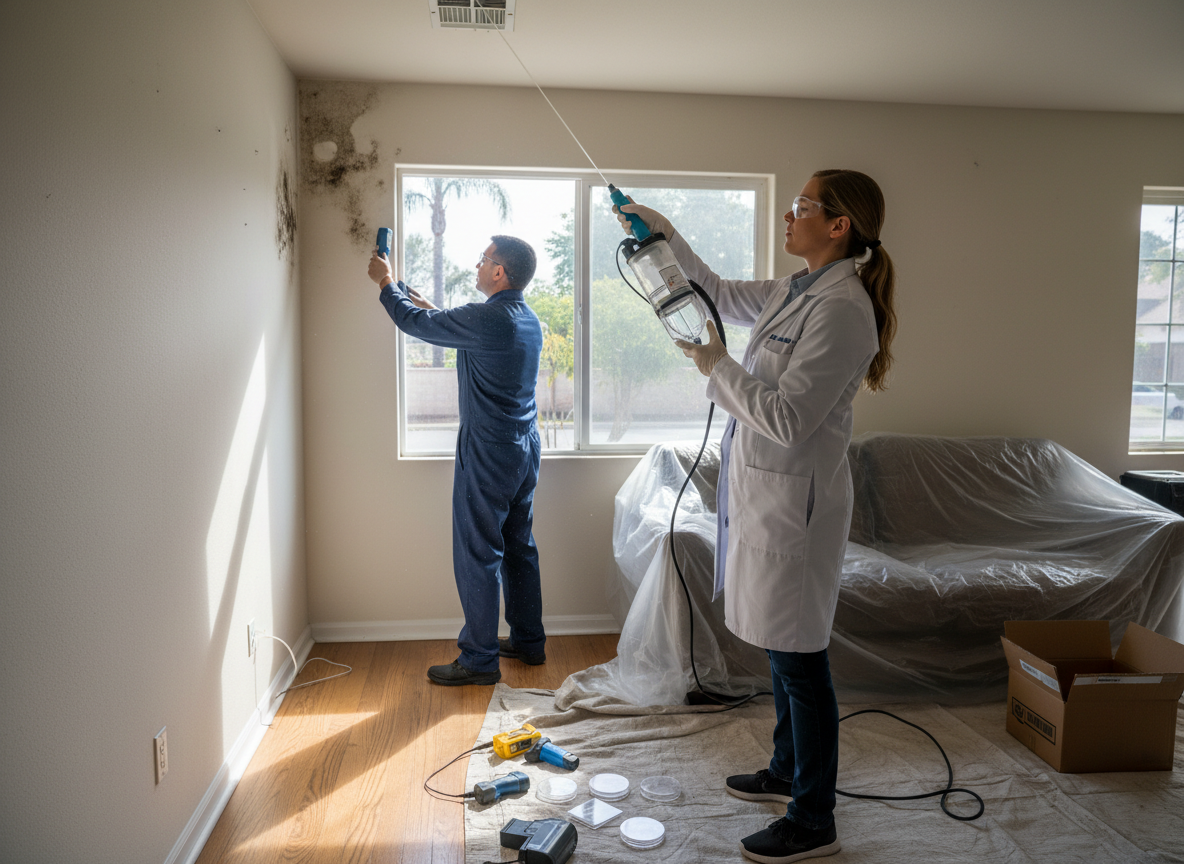
Chatsworth homes built in the 1950s and 1960s, especially ranch-style properties in West Chatsworth and around Chatsworth Park, often feature stucco exteriors and crawlspaces that trap moisture after winter rains. The Mediterranean climate brings hot dry summers that increase air conditioning use, creating condensation on ducts, while mild winters allow occasional storms to send runoff down slopes near Santa Susana Pass State Historic Park and Orcutt Ranch. Air sampling must account for these cycles because spore counts can spike in poorly ventilated attics or behind bathroom walls where irrigation overspray meets the terrain.
Testing protocols here focus on both viable and non-viable spore collection plus moisture mapping with infrared cameras. In neighborhoods like Downtown Chatsworth, older plaster and lath construction can hide hidden growth that only shows up when samples are taken from multiple zones including HVAC returns. Edge cases include cross-contamination from neighboring lots in Canoga Park or Northridge where shared drainage ditches allow water to migrate under slabs during heavy but infrequent rains.
Los Angeles County requirements for real estate transactions often trigger these assessments, yet many residents overlook post-remodel testing when new drywall meets original framing. Proper chain-of-custody documentation and third-party lab analysis remain essential because false negatives from single-location grabs miss the micro-climates created by the area's varied elevations and wind patterns through the pass.
Technician insight
In Chatsworth, the thing that catches most people out with Air quality and mold testing is the way winter rain funnels along the Santa Susana Pass slopes straight into crawlspaces of 1960s homes in West Chatsworth. Homeowners check the attic but miss how the mild winters let water sit under the slab for weeks before the dry summer heat pushes it back into living spaces through the stucco.
Crawlspace Spores After Winter Rain
A West Chatsworth homeowner noticed odors near the garage after a series of mild winter storms. Sampling revealed elevated Aspergillus in the crawlspace where hillside runoff had pooled against the foundation. We mapped moisture, collected targeted air samples, and provided a report that guided targeted drying before any remediation began.
How it works
- 1
Site Walk and Moisture Survey
Technician inspects interior and exterior for visible staining, musty odors, and water intrusion points while noting drainage around Chatsworth Park South slopes.
- 2
Air and Surface Sampling
Collect air samples from multiple rooms plus surface swabs from suspect materials, always including HVAC system returns common in local ranch homes.
- 3
Laboratory Analysis
Samples sent to accredited lab for spore identification and concentration counts, with turnaround typically within 48 hours.
- 4
Detailed Report Delivery
Written findings include location maps, photos, and specific recommendations tailored to Mediterranean climate conditions and hillside properties.
- 5
Follow-Up Consultation
Review results on site or by phone and outline next steps if elevated levels appear in West Chatsworth or Simi Valley border homes.
Pricing
Pricing varies by number of samples required and property size; quotes provided after initial assessment.